


The client computing industry has been chasing the next big form factor for a long time. The PC and the smartphone were massive markets, but both have scaled their S-curves. The tablet was supposed to be next but never achieved escape velocity. Smartwatches, same story.
One might be arriving, but it’s not what anyone expected. In 2017, Benedict Evans predicted augmented reality would be next. Quite reasonable. But three months later, the transformer paper dropped. It took a while for that to change the world, but nine years on, the new device isn’t something even more mobile than a phone. It’s a box on your desk for your AI agents to live on:
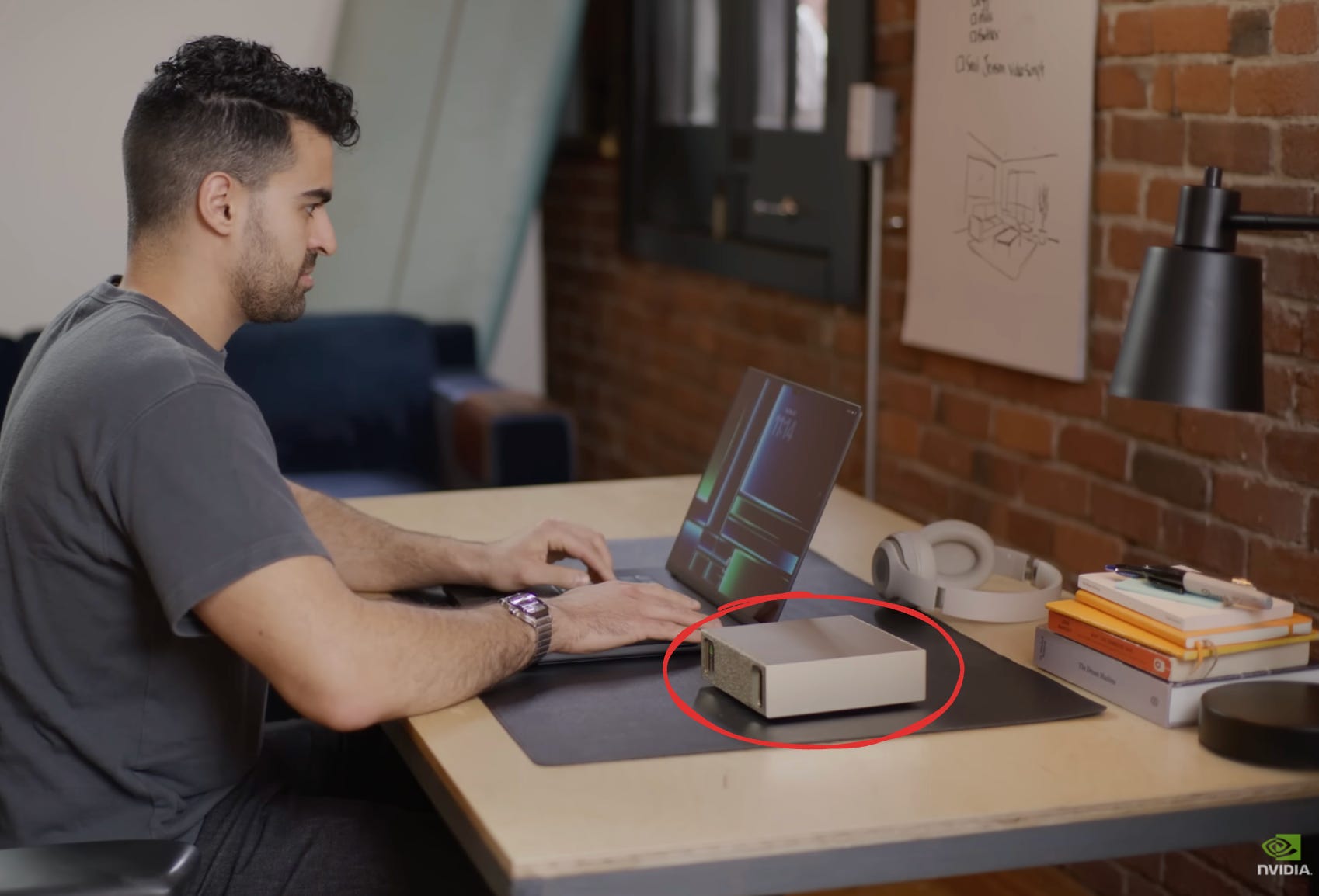
Nvidia sells the DGX Spark as a “personal AI supercomputer.” AMD calls it an Agent Computer. Perplexity is shipping Mac Minis as a Personal Computer service.
Is this the beginning of a new S-curve? Or is it another iPad? If the agentic computer takes hold, it’s additive TAM. It carries meaningful ASP because it needs serious memory and compute. Does every knowledge worker’s desk eventually have two computers on it?
But there are headwinds. Recently, Anthropic banned always-on AI agents from using its Claude subscription plans:
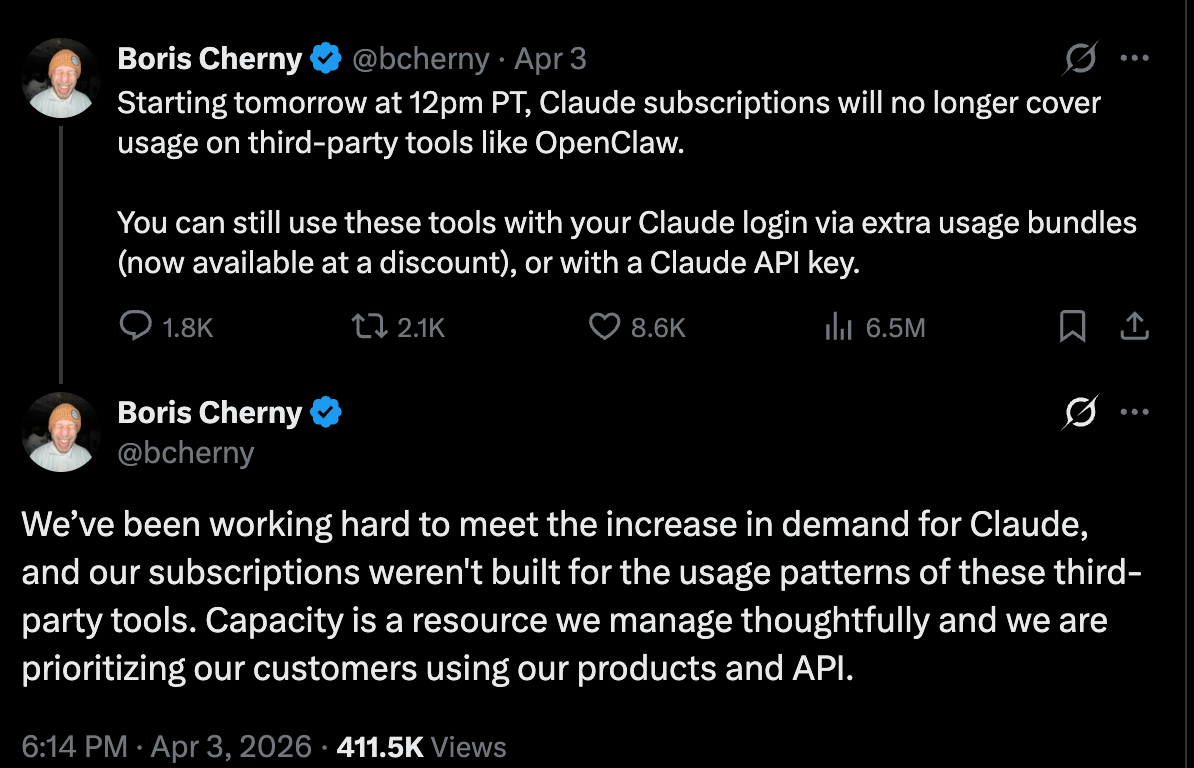
That means running OpenClaw just got a lot more expensive. And that’s not the only headwind.